
Things to Do in Astana in March
March weather, activities, events & insider tips
Low Season · Budget Friendly
March Weather in Astana
Temperature, rainfall and humidity at a glance
29°F (-1°C)
High Temp
13°F (-10°C)
Low Temp
0.8 inches (20 mm)
Rainfall
84%
Humidity
⚠ Steppe wind chill is the real enemy. Flat, exposed terrain lets March winds knock the perceived temperature 10-15°C (18-27°F) below the numbers on the screen. Frostbite on ears, nose, and cheeks is a genuine threat during long stretches outside. Cover every inch of skin and cap continuous exposure at sixty to ninety minutes between warm breaks.
⚠ Black ice blankets sidewalks and plazas throughout March when daytime highs nudge above freezing and nights refreeze the melt. Falls are routine and the surface is merciless. Pull on boots with aggressive tread or snap on ice grips, and shorten your stride to deliberate, shuffling steps.
⚠ Temperature swings arrive fast on the continental steppe. March can hand you a -15°C (5°F) dawn and a -1°C (29°F) afternoon, then rip 10°C (18°F) away in two hours when a Siberian front barrels through. Stack layers you can peel or add in minutes, never dress for a single forecast number.
Is March Right for You?
Weigh the advantages and considerations before booking
Advantages
- + Nauryz, the Kazakh New Year and Central Asia's biggest cultural celebration, falls March 21-23 and turns Astana into a city-wide open-air festival. You'll witness traditional games, taste nauryz kozhe served from enormous communal pots, and see horse-mounted kokpar matches on the frozen steppe. This spectacle simply cannot be encountered any other month. Plan around it.
- + March sits squarely in Astana's low season for tourism. The futuristic Left Bank architecture, Bayterek Tower, Khan Shatyr, the Palace of Peace and Reconciliation, is yours without queues. Museums that pack out in summer have room to breathe. Accommodation rates drop significantly from peak summer levels. Book now.
- + The city's indoor cultural infrastructure is built for steppe winters. Astana Opera stages full productions most evenings. The National Museum of Kazakhstan is one of Central Asia's finest. Khan Shatyr's indoor beach and tropical park feel surreal when it is -8°C (18°F) outside. March reveals how Astana was designed from the ground up for cold-weather living.
- + Late March brings noticeably longer days. Roughly 12 hours of daylight arrive by the equinox. The quality of light on the Ishim River's frozen surface, bouncing off the glass-and-steel Left Bank skyline, creates photography conditions that summer's haze never matches. The steppe horizon at sunset, seen from the top of Bayterek, runs unbroken for what feels like hundreds of kilometers in every direction. Bring your camera.
Considerations
- − This is bone-deep cold. Daytime highs hover around -1°C (29°F), but the Kazakh steppe is flat and treeless, and the wind cuts across the Ishim corridor without obstruction. Wind chill regularly drags the perceived temperature to -15°C (5°F) or lower. Exposed skin goes numb in minutes. If you have never experienced continental steppe cold, March in Astana will recalibrate your understanding of winter. Respect it.
- − Outdoor sightseeing windows are short. You will likely manage two to three hours outside before the cold forces you indoors. Ambitious walking tours of the Left Bank need to be broken into segments between heated stops. The Burabay lake region, Astana's prime nature escape, is still frozen solid and largely inaccessible for hiking or boating. Wait for May.
- − March sits in a shoulder period for Astana's restaurant and nightlife scene. Some seasonal venues along the Ishim embankment stay shuttered until late April. The outdoor terrace culture that defines summer dining simply does not exist yet. Nightlife concentrates in a smaller footprint around the Right Bank and a handful of Left Bank hotel bars. Adjust expectations.
Best Activities in March
Top things to do during your visit
March strips Astana down to its essentials. The Kazakh capital sits at the edge of winter's retreat. Daytime highs hover just below freezing. Nights plunge to minus ten Celsius. That is cold enough that the Ishim River remains locked under a pale shelf of ice. Snow still blankets the broad avenues and the steppe beyond the city limits. But the light has changed. By mid-March, the sun lingers past six in the evening. It throws long amber shadows across the glass facades of the Left Bank's towers. The air is dry and sharp. It carries the faint mineral smell of frozen earth whenever the wind drops. Locals move briskly between heated interiors. The city's indoor life, its malls, museums, and restaurant culture, takes on a particular intensity that summer visitors never see. This is Astana at its most intimate. The monumental architecture that defines the skyline, the Bayterek Tower, the Khan Shatyr tent, the Palace of Peace and Reconciliation, stands against skies that shift between steel gray and startling blue within hours. Restaurants along Kenesary Street fill early for dinner. Steam rises from bowls of beshbarmak and lagman. The warm funk of fermented mare's milk drifts from traditional eateries. The cleaner scent of grilled lamb comes from modern Kazakh kitchens. Nightlife in Astana runs late even on weekdays. It concentrates along the Left Bank's bar strips, where the cold outside makes every warm interior feel conspiratorial. Safety is rarely a concern. Astana consistently ranks among Central Asia's most orderly capitals. Even late-night walks along the lit boulevards feel uneventful. For travelers willing to layer up and embrace the cold, March offers something the peak months cannot. You get the full run of Astana's indoor and outdoor attractions without the queues. You get a chance to experience the Kazakh steppe in its most elemental season: white, vast, and windswept under a widening sky.

Astana City Tour: Private Full Day with Lunch and Comfort Pickup
day_tripThe Astana City Tour: Private Full Day with Lunch and Comfort Pickup develops across an entire day. It threads through both banks of the Ishim in a heated vehicle with a dedicated guide who calibrates the route to your pace. You move from the Soviet-era grid of the Right Bank, where Stalinist facades still line the older avenues, their plaster cracking to reveal brick underneath, across to the futurist Left Bank. There, Norman Foster's pyramid and the curving blue glass of the concert hall catch whatever light the March sky offers. Lunch is included. It is typically at a traditional Kazakh restaurant where the smoky aroma of horsemeat sausage and the tang of pickled vegetables anchor the meal.
A single day that decodes Astana's split personality, its Soviet bones and its post-independence ambitions, with a local narrator who bridges both.
Insider tip: Ask your guide to include a stop at the Atameken ethno-memorial complex early in the route, before the outdoor model map collects its midday glare. In March the low sun picks out the miniature landmarks with unusual clarity.
This month: March temperatures hover near freezing during the day and drop sharply after sunset. The private vehicle means you step out only at each site, making the cold manageable even without extreme gear.
Astana City Tour: Explore Night City with a Certified Guide
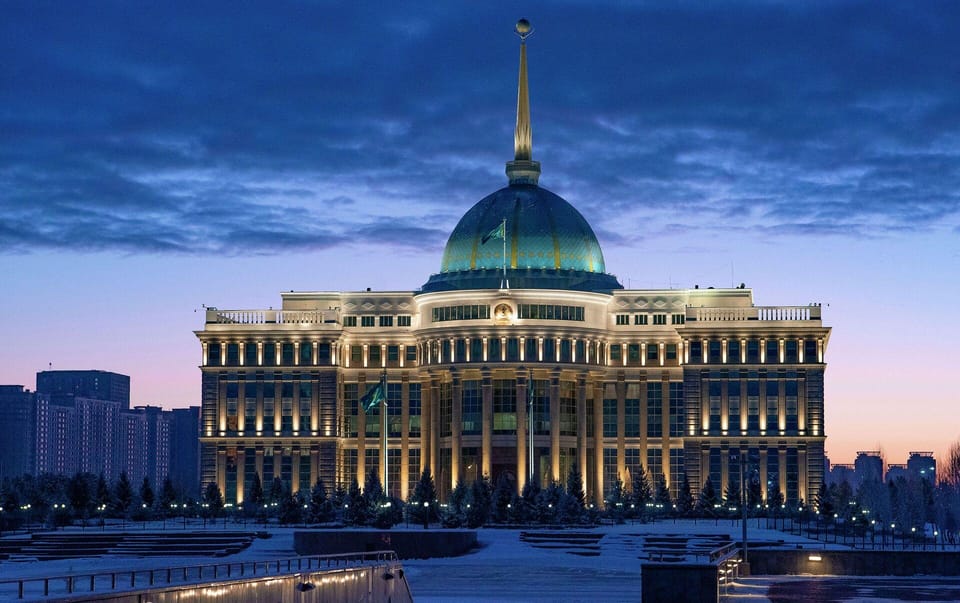
guided_experienceThe Astana City Tour: Explore Night City with a Certified Guide takes advantage of a fact that casual visitors miss. Astana was designed to be illuminated. After dark, the Bayterek Tower glows gold against the black sky. The Khan Shatyr's translucent skin shifts through programmed blues and whites. The Presidential Palace anchors the far end of Nurzhol Boulevard in warm floodlight. Your certified guide walks you through the Left Bank's central axis on foot, narrating the symbolism baked into each structure. The distances between buildings are not accidental. The sight lines are deliberate. The crunch of packed snow underfoot and the bite of cold air on exposed skin keep you viscerally present.
Astana's architects conceived the capital as a nocturnal spectacle, and this guided walk is the sharpest way to read the city's illuminated grammar.
Insider tip: Wear thermal layers beneath a windproof shell rather than a single heavy coat. You will move between heated lobbies and the open boulevard repeatedly, and overheating indoors is the real discomfort.
This month: March darkness falls by six thirty, giving you a long window of full nightscape without the extreme cold of January nights.

Astana: Burabay Oasis Private Tour+ Lunch+ Pickup+ Bonus Activity
private_tourThe Astana: Burabay Oasis Private Tour with Lunch, Pickup, and Bonus Activity pulls you out of the capital entirely. It drives roughly two and a half hours north into the Akmola region to reach Burabay National Park, a landscape so unlike the surrounding steppe that Kazakhs call it the country's Switzerland. In March, the park's granite outcrops rise from deep snow. The pine forests are silent and frosted. The lakes remain frozen solid, their surfaces swept clean by wind into pale sheets that reflect the sky. The included lunch features regional dishes. The bonus activity varies by season and conditions. The drive itself is part of the experience. The steppe rolls out flat and white in every direction, broken only by the occasional village trailing woodsmoke from tin chimneys.
Burabay rewrites your assumptions about Kazakhstan's geography. You get forested mountains and alpine lakes two hours from one of the flattest capitals on earth.
Insider tip: Bring sunglasses with strong UV protection. The combination of snow cover and high-altitude sun in Burabay causes fierce glare even on overcast days.
This month: The lakes are still frozen in March, and hiking trails may be snow-packed. The park takes on a hushed, boreal character entirely different from its green summer persona.

Private Half-Day City Tour of Astana in Comfort
guided_experienceThe Private Half-Day City Tour of Astana in Comfort compresses the capital's essential stops into four to five hours. It is good for travelers with a tight layover or those saving a full day for a Burabay excursion. A private vehicle and guide collect you from your hotel and move efficiently between the Hazret Sultan Mosque, its white marble interior cool and echoing, the geometric tilework razor-sharp in the diffused light from high windows, the National Museum, where the Golden Man stands in his reconstructed armor under spotlights, and the Bayterek Tower observation deck, where the panoramic windows frame Astana's grid receding into the steppe in every direction.
The most efficient way to internalize Astana's scale and ambition when your schedule does not permit a full day.
Insider tip: Request that your guide schedule the Bayterek Tower stop for the end of the tour. Late-morning light from the south illuminates the Left Bank's facades and photographs far better than the flat midday overhead.
Astana: Burabay National Park Tour with Lunch and Pickup
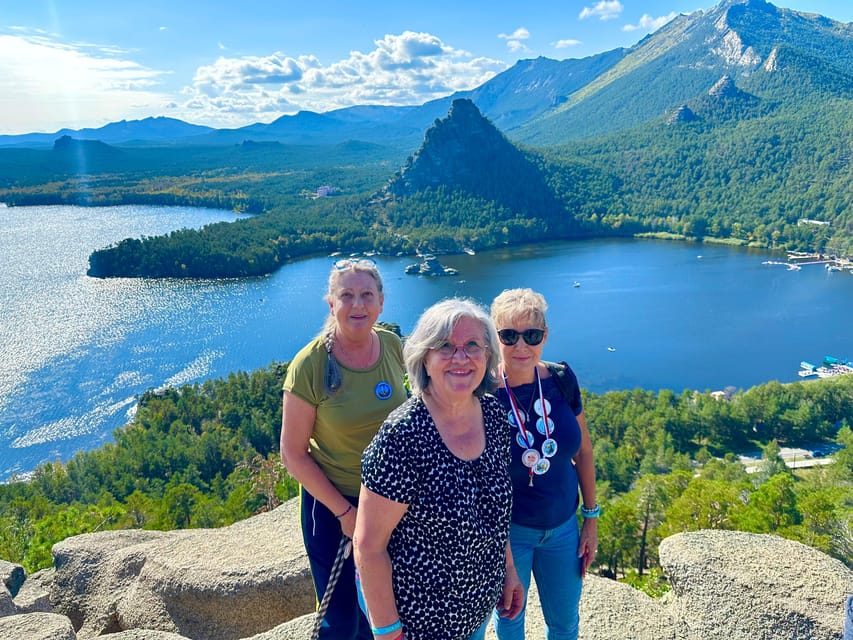
guided_experienceThe Astana: Burabay National Park Tour with Lunch and Pickup follows the same northward route into the Akmola highlands but in a small-group format, which changes the texture of the experience. Fellow travelers, often a mix of expats based in Astana and transit visitors breaking a journey, trade observations during the drive. The guide adjusts commentary to the group's curiosity. At Burabay, you walk along the snow-covered lakeshore paths where pine resin scents the cold air. You stop at the Zhumbaktas rock formation, a granite pillar shaped by wind erosion into a profile that locals read as a woman's face. You sit down to a communal lunch where steaming plov and fresh flatbread warm you from the inside. The return drive often catches a pink-and-orange steppe sunset that spreads across the entire western horizon.
The group dynamic adds a social dimension to Burabay that solo or private tours lack, and the shared lunch becomes a genuine cross-cultural exchange.
Insider tip: Sit on the right side of the vehicle heading north. The approach to Burabay's forested hills from the open steppe is more dramatic from that angle, and you will see the transition from flat grassland to granite ridges develop through your window.
This month: Snow conditions in Burabay can make some trails slippery in March. The guides carry traction aids. But sturdy waterproof boots with ankle support are essential.
Astana: Burabay Oasis National Park Adventure
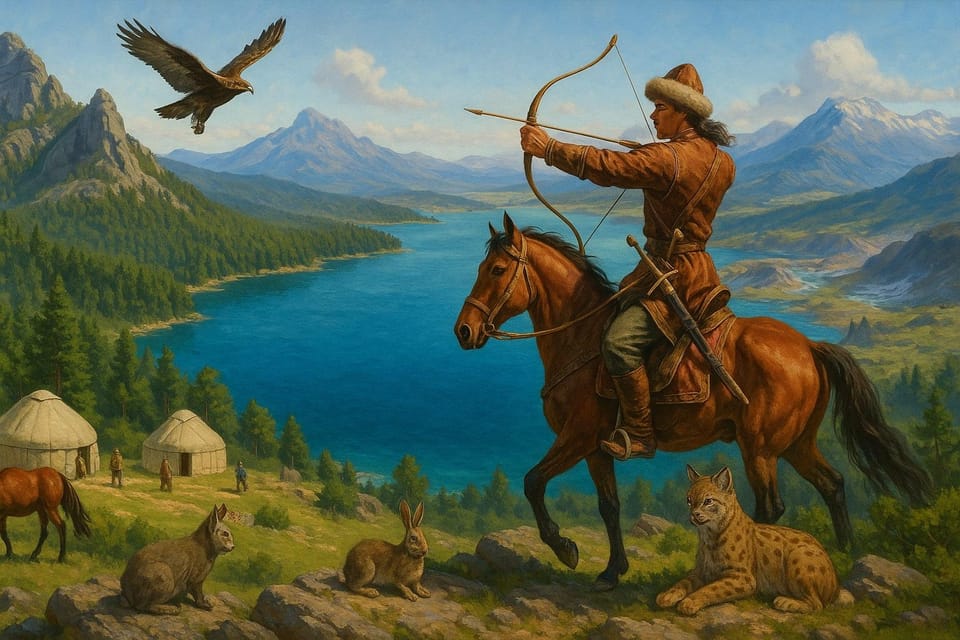
otherThe Astana: Burabay Oasis National Park Adventure leans into the physical side of the park. It pushes beyond the standard viewpoints into terrain that rewards effort. The itinerary varies with conditions. In March, that typically means snowshoeing through the birch and pine forests that ring Borovoe Lake, scrambling up to the Bolektau ridge for a view that stretches across frozen water and snow-dusted peaks, and descending through quiet clearings where animal tracks stitch patterns into fresh powder. The cold concentrates sensation. You notice the creak of snow compacting underfoot, the sting of wind on exposed cheeks, the sudden warmth when you step into a sheltered ravine where the sun has been heating the rock face all morning. This is not a contemplative sightseeing stop. It is an active half day in genuine wilderness.
The only Burabay option that treats the park as backcountry rather than scenery, demanding physical engagement with the landscape in return for solitude and unscripted encounters.
Insider tip: Pack a thermos of hot tea with lemon for the ridge stops. The guides provide lunch. But nothing cuts through Burabay's March wind chill like a hot drink at altitude.
This month: March snowpack in Burabay is typically deep and stable, making for excellent snowshoeing conditions. The adventure itinerary may shift if an early thaw softens the trails, which occasionally happens in the final week of March.
Explore More Activities in Astana
Didn't see anything interesting yet?
Browse Viator's full catalog of tours, day trips, food experiences, and private guides in Astana.
See All Astana Tours on ViatorWhere to Stay in Astana in March
Hand-picked hotels across price tiers for March travellers.
Public Holidays in March
Dates that affect opening hours, transport and crowds
Халықаралық әйелдер күні
Known in English as International Women's Day. Observed nationwide as a public holiday.
Наурыз мейрамы
Known in English as Nauryz Meyramy. Observed nationwide as a public holiday.
Наурыз мейрамы
Known in English as Nauryz Meyramy. Observed nationwide as a public holiday.
Наурыз мейрамы
Known in English as Nauryz Meyramy. Observed nationwide as a public holiday.
Халықаралық әйелдер күні
Known in English as International Women's Day. Observed nationwide as a public holiday.
Наурыз мейрамы
Known in English as Nauryz Meyramy. Observed nationwide as a public holiday.
Наурыз мейрамы
Known in English as Nauryz Meyramy. Observed nationwide as a public holiday.
Наурыз мейрамы
Known in English as Nauryz Meyramy. Observed nationwide as a public holiday.
Packing Checklist
Bookmark this page — your progress is saved between visits
Need the full list with shopping links?
Climate-specific gear, brand recommendations, and what to leave at home.
View Astana Packing List →Essential Tips
Insider knowledge and common pitfalls to avoid
Insider Knowledge
The underground pedestrian tunnels connecting major Left Bank buildings are how locals move in March. The tunnel system beneath Nurzhol Boulevard links Bayterek Tower, the shopping areas, and several government buildings. Once you learn the entrances, you can cover most of the monumental axis without stepping outside into the wind. Look for the staircases marked with blue signs near major intersections. They are easy to miss if nobody tells you they exist.
Nauryz kozhe, the ceremonial seven-ingredient soup served during the March holiday, varies enormously depending on who makes it. The versions ladled from public kazan pots at festival grounds tend toward the mild and grain-heavy. The best bowls come from home cooks and small canteens in the Right Bank's older neighborhoods, where the broth has the fermented tang of kurt and the meat is horse, not beef. If someone invites you to their home for Nauryz, accept. This is where the real food lives. Refusing a Nauryz invitation is a genuine social misstep.
Taxi apps work reliably in Astana. But in March, demand spikes during the morning commute and again around 6 PM when the temperature drops sharply. The period between 10 AM and 3 PM is the sweet spot for both transport availability and outdoor exploration. The sun is at its highest, the wind often drops slightly, and you are competing with locals who are at work rather than sightseeing.
The Right Bank, Astana's pre-1997 city center, is where the city lives in winter. The Left Bank's monumental architecture is the reason you came. But the Soviet-era apartment blocks and tree-lined streets around the old center hold the canteens serving beshbarmak (boiled horse meat over wide flat noodles, eaten with your hands from a communal platter), the bazaars where dried fruit and spice vendors know their regulars by name, and the kind of neighborhood bars where a dombra player might start up unprompted. Tourists who stay exclusively on the Left Bank see the showroom. The Right Bank is the living room.
Avoid These Mistakes
Ignore the wind chill at your peril. The gauge may say -1°C (29°F) on a March afternoon, which sounds harmless to anyone who has wintered in Europe. Astana sprawls across naked steppe with no hills to blunt the blast, and the Ishim River corridor squeezes air between the Left Bank glass towers like a wind tunnel. On skin the real reading is routinely 10-15°C (18-27°F) lower. Dress for -15°C (5°F) even when the forecast promises -1°C (29°F).
Do not book an outdoor-heavy itinerary as if March were a gentle shoulder month. Burabay national park, 250 km (155 miles) north, is Astana's signature escape. But in March the trails are locked in ice, the roads can be treacherous, and the lake life that defines summer is still months away. Build a city trip around warm interiors and treat any outdoor minutes as a bonus squeezed between heated stops, not the headline act.
Never assume the capital folds under the cold. First-timers picture a ghost town and instead meet a working city of over a million who have handled steppe winters for generations. Malls stay open, the opera stages shows, restaurants serve past midnight, and Nauryz delivers some of Central Asia's liveliest public festivals. The cold demands a plan, not surrender. Work around it instead of pretending it will vanish.
Ready to plan your trip to Astana?
Now that you've got the research covered, here's where to go next.